

Global Shift to Eco Beauty Lifts Biodegradable Cosmetic Packaging Market Toward USD 10.9 Billion by 2033 - SRI
Biodegradable Cosmetic Packaging Market Size, Future Growth and Forecast 2033
Global biodegradable cosmetic packaging market to reach USD 10.96 billion by 2033 as brands accelerate adoption of eco-friendly materials.
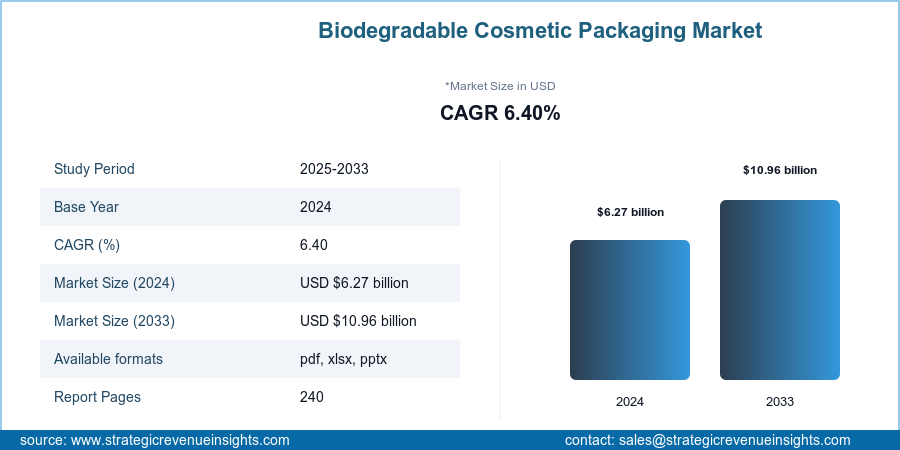
LONDON, UNITED KINGDOM, UNITED KINGDOM, December 2, 2025 /EINPresswire.com/ -- Overview of the Rising Demand for Biodegradable Cosmetic PackagingLondon, UK - December 2025 | Strategic Revenue Insights Inc. - The global biodegradable cosmetic packaging market is entering a decisive growth phase as sustainability moves from trend to expectation across the beauty value chain. The segment reached USD 6.27 billion in 2024 and is projected to hit USD 10.96 billion by 2033, driven by a measurable push from consumers, regulators, and large cosmetic brands toward low impact materials. The shift is not only reshaping how brands think about packaging but also changing assumptions about what qualifies as premium, responsible, and future ready.
A detailed overview of this fast evolving space is available at Biodegradable Cosmetic Packaging
https://www.strategicrevenueinsights.com/industry/biodegradable-cosmetic-packaging-market which outlines the key forces accelerating this shift. What this really means is that biodegradable packaging is no longer a niche sustainability experiment but a core pillar of long-term brand strategy that influences product design, materials selection, manufacturing, and supply chain planning. As beauty brands reassess their environmental footprint, biodegradable packaging is becoming an anchor in long horizon decisions that extend from raw material procurement to end of life recovery.
Browse the associated report:
https://www.strategicrevenueinsights.com/ja/industry/biodegradable-cosmetic-packaging-market
https://www.strategicrevenueinsights.com/kr/industry/biodegradable-cosmetic-packaging-market
https://www.strategicrevenueinsights.com/pt/industry/biodegradable-cosmetic-packaging-market
https://www.strategicrevenueinsights.com/it/industry/biodegradable-cosmetic-packaging-market
https://www.strategicrevenueinsights.com/es/industry/biodegradable-cosmetic-packaging-market
https://www.strategicrevenueinsights.com/da/industry/biodegradable-cosmetic-packaging-market
https://www.strategicrevenueinsights.com/de/industry/biodegradable-cosmetic-packaging-market
https://www.strategicrevenueinsights.com/fr/industry/biodegradable-cosmetic-packaging-market
Market Trends Shaping the Transition to Sustainable Beauty Packaging
The market trends shaping this sector today reflect a deeper rethinking of how packaging aligns with environmental responsibility. Beauty brands are under rising scrutiny for their dependence on single use plastics, and this pressure is reshaping procurement priorities. Consumers are asking sharper questions about the environmental impact of packaging, especially in beauty where product volumes are high and refill rates are low. This scrutiny is pushing companies to redesign packaging hierarchies and invest in materials that break down naturally without leaving harmful microplastics. Paper, biodegradable plastics, moulded fibre, bio-based films, and compostable materials are steadily replacing conventional petrochemical plastics in skincare, haircare, makeup, and fragrance packaging. This transformation is not superficial. It reflects a structural shift toward packaging that signals a cleaner, more transparent product lifecycle, one that matches the rising popularity of natural beauty formulations and ethical sourcing claims.
Consumers have become more selective, often rewarding brands that adopt clean packaging with higher loyalty and a measurable willingness to pay a premium. The emotional link between biodegradable packaging and the idea of wellness is growing stronger. The tactile and visual cues of biodegradable materials, such as textured recycled paper, plant-based polymers, and compostable moulded shapes, are increasingly associated with purity and authenticity. This connection is shaping how brands present themselves in stores, in advertising, and across digital channels. What is shifting now is that biodegradable packaging is not just an environmental checkbox but a strategic differentiator that influences product launches, shelf visibility, and overall brand trust in both mass and prestige segments. As this trend accelerates, biodegradable packaging is becoming a storytelling device that communicates a brand’s commitment to climate awareness and responsible consumption.
Technological Advancements Reinforcing Biodegradable Packaging Adoption
Technology is playing a significant role in the momentum behind biodegradable cosmetic packaging. Material innovation is moving fast, with companies advancing PLA, PHA, coated paper, algae-based polymers, cellulose-based films, and hybrid materials that offer better moisture and oxygen barriers than earlier generations. These advancements are addressing the long-standing performance gap between ecofriendly packaging and traditional plastic-based systems. For years, biodegradable packaging struggled with issues such as fragility, moisture sensitivity, and poor compatibility with high precision printing. The latest generation of bio materials is more durable, more resilient, and far more adaptable to the high-quality finishing needed for beauty products.
These improvements are closing the gap between biodegradability and functional performance, which historically limited adoption across sensitive categories like serums, oils, colour cosmetics, and fragrances. The ability to maintain product stability without compromising biodegradability is becoming a standard expectation rather than an aspiration. Automation in manufacturing is also improving scale and cost efficiency. As factories retool for bio-based materials, production lines are becoming faster and more consistent, reducing the unit cost of biodegradable packaging. This is especially relevant for global beauty brands with large SKU counts and high production volumes.
Smart packaging technologies are also evolving to support biodegradable structures. What once required synthetic plastic components can now be integrated through digital inks, laser etching, and QR enabled traceability that align with the compostability of the underlying material. These innovations help brands enhance authenticity, communicate sustainability credentials more transparently, deliver recycling or composting instructions directly on pack, and build direct to consumer connections. As quality, durability, and finishing techniques improve, biodegradable packaging is expanding into categories that previously resisted change due to concerns about fragility or material limitations, especially premium fragrances and makeup compacts.
Sustainability Challenges Influencing Adoption and Long-Term Viability
Sustainability challenges continue to surface across the value chain, and they need close attention. The biggest issue is the gap between material innovation and disposal infrastructure. Even the most advanced biodegradable packaging will not decompose as intended without access to proper composting or recycling systems. Many markets still lack municipal facilities that handle industrial compostable materials, which limits real world environmental impact. Without the infrastructure to support end of life processes, biodegradable packaging risks being treated like traditional plastic waste, which undermines its value proposition.
Another issue is cost. Biodegradable materials can be 20 to 60 percent more expensive than conventional plastics depending on the region, feedstock availability, and supply chain scale. This cost difference can be a barrier for mass market brands that operate on tight margins. However, research and development efforts are narrowing this gap through optimized feedstock processing, improved extrusion techniques, and hybrid structures that use thinner layers of biodegradable polymers without compromising integrity. As demand grows, economies of scale will continue improving cost competitiveness.
Regulations add another layer of complexity, with varying global standards for compostability, biodegradability, labelling, and extended producer responsibility. Brands need to navigate country specific rules that determine what qualifies as biodegradable, what can be marketed as compostable, and what disposal instructions must appear on packaging. Still, the direction is clear. Countries across Europe, Asia Pacific, and North America are tightening rules around single use plastics and placing more pressure on cosmetic brands to transition to biodegradable and recyclable formats. The industry is responding with better testing, certification, and compliance frameworks that support credible sustainability claims instead of greenwashed labels. As certification standards mature, brands will have clearer pathways to validating environmental performance.
Market Analysis Reflecting Growth Momentum Across Regions
The market analysis for biodegradable cosmetic packaging shows a landscape that is increasingly competitive but also full of opportunity. With a projected CAGR of 6.40 percent from 2025 to 2033, the sector is positioned for steady expansion driven by a mix of regulatory pressure and shifting consumer expectations. Paper commands the largest share due to ease of sourcing, familiarity, and consumer preference for natural textures. Biodegradable plastics follow, driven by advancements that increase durability, clarity, and compatibility with decorative finishes. These biodegradable plastics are especially relevant for products that require precision moulding such as compacts, pumps, droppers, and airtight containers.
In terms of application, skincare leads the market thanks to its broad product range and rapid shift toward clean beauty narratives. The expanding global skincare market creates natural demand for biodegradable formats that match the marketing of natural ingredients. Makeup and fragrances are gaining momentum as new materials replicate the rigidity and premium appearance previously achievable only with conventional plastics and glass. The push from luxury brands is particularly notable, as high-end labels increasingly view sustainable packaging as necessary for long term relevance.
Regionally, North America and Europe maintain leadership, backed by strong regulatory environments, early adopter brands, and active consumer engagement. Asia Pacific, however, is the fastest growing region with rising disposable incomes, an expanding beauty market, and national plastic reduction initiatives, especially in China, India, and Japan. Latin America and the Middle East are emerging regions where interest in sustainable packaging is rising as local beauty industries grow and global brands expand their presence.
Key players shaping the competitive landscape include Amcor, Sealed Air, Mondi, and Sonoco. Each is investing heavily in research, strategic partnerships, and next generation biodegradable material platforms. These companies are focusing on improving durability, enhancing barrier protection, and delivering premium designs that appeal to global brands. Several smaller specialized firms are also carving out premium and niche segments with design centric packaging that aligns with boutique cosmetic brands. This combination of large-scale manufacturers and innovative niche players is making the market dynamic and competitive.
Future Outlook for Biodegradable Cosmetic Packaging Through 2033
The future outlook for biodegradable cosmetic packaging suggests that the market is on the verge of broader mainstream adoption. Regulatory tightening around waste generation will keep pushing brands toward biodegradable formats across all categories, including those that have traditionally depended on rigid plastics. Consumer demographics are also changing. Gen Z and younger millennials display stronger sustainability preferences that influence purchasing decisions across beauty categories. These consumers are more informed, more vocal, and more likely to demand transparency about a product’s environmental footprint.
Innovation will continue to focus on circular design, compostable structures, reusable hybrid systems, and bioengineered materials that break down faster and more efficiently. The next phase of development will likely incorporate regenerative materials that improve biodegradation rates without compromising aesthetics or functionality. Digital traceability will become standard, giving brands and consumers clearer visibility into end-of-life pathways. Scannable codes that instruct users on disposal, verify compostability, and track sustainability metrics will become common tools for brand engagement.
Emerging markets will open new demand pockets as local brands seek sustainable differentiation in increasingly crowded beauty ecosystems. Markets in Southeast Asia, Latin America, and the Middle East are beginning to adopt sustainability branding as part of aspirational lifestyle marketing, which creates new avenues for biodegradable packaging suppliers. The next few years will also bring consolidation as large global packaging firms acquire agile innovators specializing in biodegradable materials. This consolidation will help scale production, enhance technology transfer, and accelerate the commercialization of new biodegradable materials.
What seems certain is that biodegradable cosmetic packaging will play a defining role in how the beauty industry addresses environmental responsibility, product identity, and regulatory compliance through 2033. As the landscape matures, brand competitiveness will increasingly depend on the adoption of sustainable materials that meet global expectations for transparency, circularity, and responsible consumption.
Closing Perspective on the Importance of Biodegradable Packaging
In closing, biodegradable cosmetic packaging is no longer an optional sustainability upgrade but a strategic necessity for beauty brands preparing for the next decade of growth. As the market moves toward USD 10.96 billion by 2033 and innovations accelerate across materials, manufacturing, and circular models, the companies that invest early will be best positioned to lead. The alignment between consumer preferences, regulatory directives, and material advancements is creating a market environment where biodegradable packaging will become the standard rather than the alternative.
For a deeper view of the market, sourcing strategies, and competitive insights, readers can explore Strategic Revenue Insights at https://www.strategicrevenueinsights.com which provides comprehensive industry intelligence and forecast data that help stakeholders navigate the evolving landscape.
Related and Popular Reports:
https://www.strategicrevenueinsights.com/industry/biodegradable-bagasse-cutlery-market
https://www.strategicrevenueinsights.com/industry/biodegradable-bubble-wrap-packaging-market
https://www.strategicrevenueinsights.com/industry/biodegradable-coffee-cup-market
https://www.strategicrevenueinsights.com/industry/biodegradable-cup-market
https://www.strategicrevenueinsights.com/industry/biodegradable-egg-cartons-market
https://www.strategicrevenueinsights.com/industry/biodegradable-film-sheet-market
https://www.strategicrevenueinsights.com/industry/biodegradable-food-packaging-market
https://www.strategicrevenueinsights.com/industry/biodegradable-bags-market
https://www.strategicrevenueinsights.com/industry/biodegradable-cellophane-tape-market
https://www.strategicrevenueinsights.com/industry/biodegradable-coffee-filters-market
https://www.strategicrevenueinsights.com/industry/biodegradable-disposable-foodservice-market
https://www.strategicrevenueinsights.com/industry/biodegradable-egg-tray-market
https://www.strategicrevenueinsights.com/industry/biodegradable-foam-sheets-market
https://www.strategicrevenueinsights.com/industry/biodegradable-food-packaging-films-market
https://www.strategicrevenueinsights.com/industry/biodegradable-bopla-film-market
https://www.strategicrevenueinsights.com/industry/biodegradable-cellulose-tape-market
https://www.strategicrevenueinsights.com/industry/biodegradable-courier-bag-market
https://www.strategicrevenueinsights.com/industry/biodegradable-dixie-cup-market
https://www.strategicrevenueinsights.com/industry/biodegradable-film-formers-market
https://www.strategicrevenueinsights.com/industry/biodegradable-food-container-market
https://www.strategicrevenueinsights.com/industry/biodegradable-food-service-disposables-market
About Us:
Strategic Revenue Insights Inc., a subsidiary of SRI Consulting Group Ltd, empowers organizations worldwide with data-driven market intelligence. Headquartered in London, United Kingdom, we deliver syndicated research reports, tailored consulting solutions, and actionable insights that equip clients to make confident, future-focused strategic decisions.
Our team of seasoned analysts—based in London and connected globally—continuously tracks markets, identifies emerging trends, and uncovers growth opportunities to support long-term client success. As part of SRI Consulting Group Ltd, we are committed to accuracy, clarity, and practical relevance, helping businesses navigate competitive landscapes, optimize strategies, and accelerate revenue growth.
By combining rigorous research methodologies with deep industry expertise, Strategic Revenue Insights Inc. provides organizations with a comprehensive market perspective that drives measurable results and sustained competitive advantage.
Media Contact:
Company Name: Strategic Revenue Insights Inc.
Contact Person: Ashwani
Email: sales@strategicrevenueinsights.com
Phone: +44 7877403352
Address: Suite10 Capital House 61 Amhurst Road, E8 1LL
City: London
State: London
Country: United Kingdom
Website: www.strategicrevenueinsights.com
Website: www.strategicpackaginginsights.com
Website: www.sriconsultinggroupltd.com
Rohit Bhisey
Strategic Revenue Insights Inc.
+44 7877 403352
sales@strategicrevenueinsights.com
Visit us on social media:
LinkedIn
Facebook
YouTube
X
Other
Legal Disclaimer:
EIN Presswire provides this news content "as is" without warranty of any kind. We do not accept any responsibility or liability for the accuracy, content, images, videos, licenses, completeness, legality, or reliability of the information contained in this article. If you have any complaints or copyright issues related to this article, kindly contact the author above.
